


A genuine history
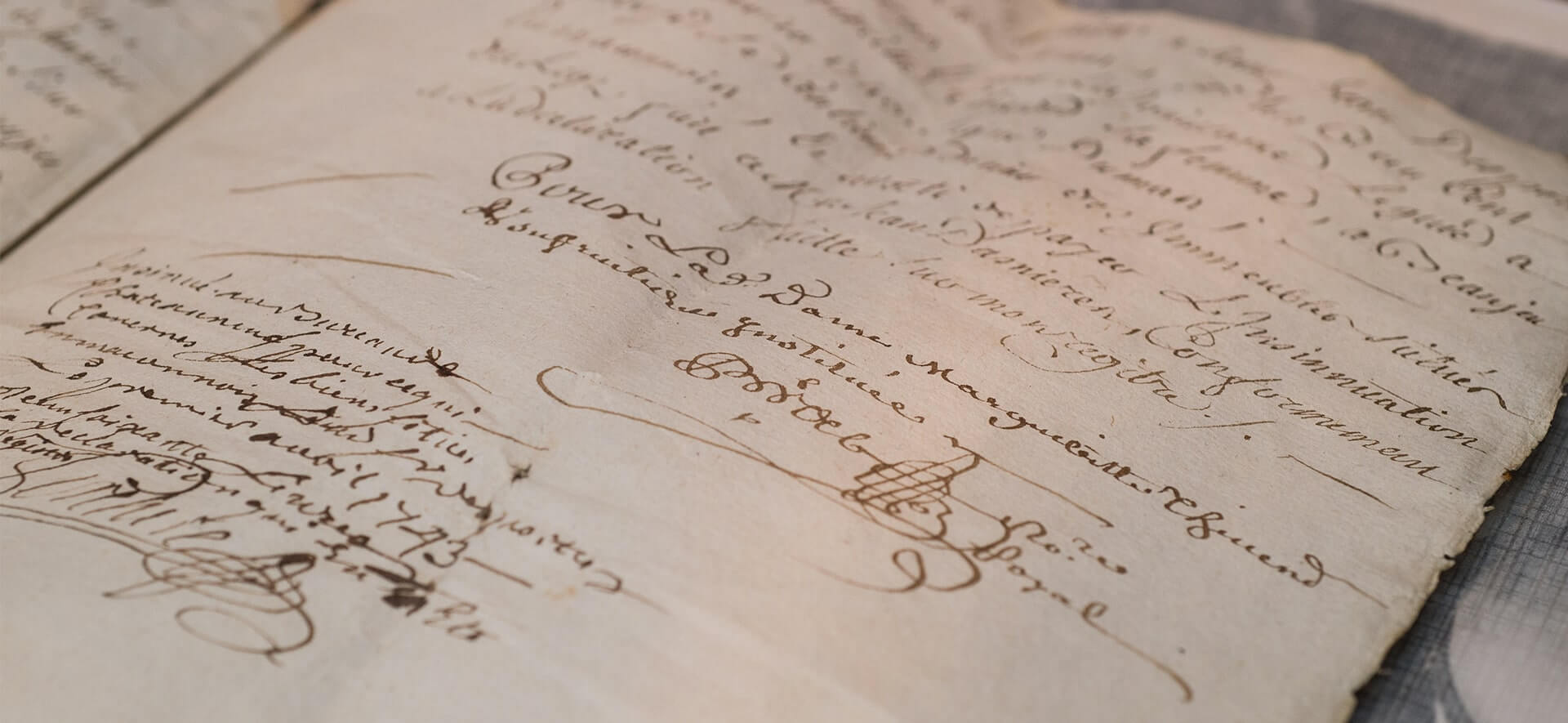
“We don’t inherit the earth from our parents, we borrow it from our children.” Antoine de Saint-Exupéry
-
XIIe siècle
The Lady of Brouilly
In the 12th century, a Lady living in Brouilly gave Humbert III, Lord of Beaujeu, her property and “40 men”: the Clos de Brouilly, later sold to the Canons of Saint Irénée from Belleville.
-
1240
Du Sire de Beaujeu aux Chanoines de Saint Irénée
En 1240, Humbert III,Sire de Beaujeu et père de Mme Dudeffand céde la propriété aux Chanoines de Saint-Irénée de Belleville.
-
1383
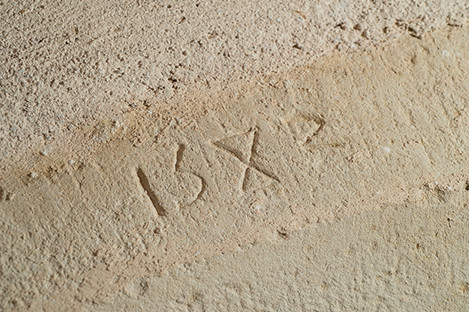
Birth of the Manor
In the 14th century, the first part of the manor was built, later to be called Château Thivin. The date 1383 can still be seen over the door to a small cellar.
-
XVIIIe siècle
“Beauregard Manor”
In 1645, the Marquis of Vichy’s family bought the house and its cellar, at that time called “Beauregard”, from the la Bussière family. The Vichy family would remain the owners until the Revolution, i.e. for 145 years.
-
Après la Révolution
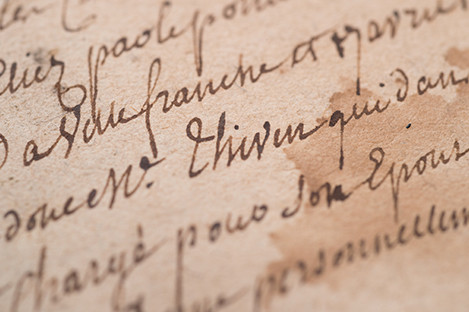
The residence became Château Thivin
In 1813, the château was sold as national property to a barrister from Parliament, Mr Thivind, who gave it its final name, as Thivin was the popular deformation of Thivend.
-
1828-1830
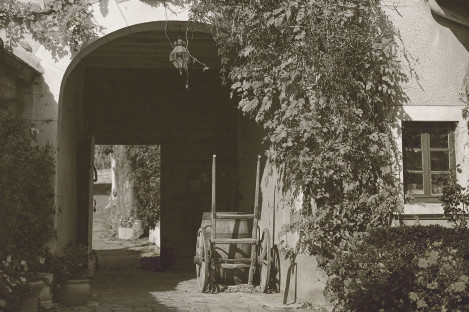
Construction of the outbuildings
The vaulted cellar, vat room, and caretaker’s cottage were built.
-
1831
The Swiss Launderer
During the years that the textile industry was flourishing in Upper Beaujolais, a new laundering technique was brought by the, among them one Jean Keneqél, from the canton of Appenzelle. In 1831, he bought the newly-restored Château Thivin and its vineyard. His family would remain its owners for 47 years.
-
1877
Zaccharie & Marguerite Geoffray
This is when the Geoffray family story begins at Château Thivin.
It was on 8 June 1877, a year of hard frosts and phylloxera, that Zaccharie Geoffray (son, grandson, and great-grandson of Claude Geoffray), a wine-grower in Durette, and his wife, Marguerite Bernard, bought Château Thivin at auction with a little less than 2 hectares of vines “le Clos de Brouilly”. -
1894
Claude & Pierrette
From 1894 onwards, his son Claude Geoffray and his wife Pierrette Pereme from Saint-Etienne-la-Varenne extended the estate a great deal through the purchase of vineyards and houses.
-
1921
Claude Thomas & Yvonne
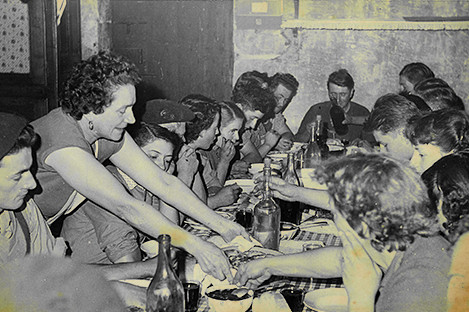
His son Claude-Thomas, returning home after the Great War, would take over the estate and overcome the slump in sales in the 1930s by creating the appellation “Côte de Brouilly”. With his wife Yvonne Chanrion, he put in a great deal of effort to get the “Côte de Brouilly” cru better known and to develop it, as well as Beaujolais in general with the setting up of the Beaujolais Centre in 1953. Aunt Yvonne would entertain a great many personalities from the arts and the press, as for example the visit by Colette in 1947.
-
1948
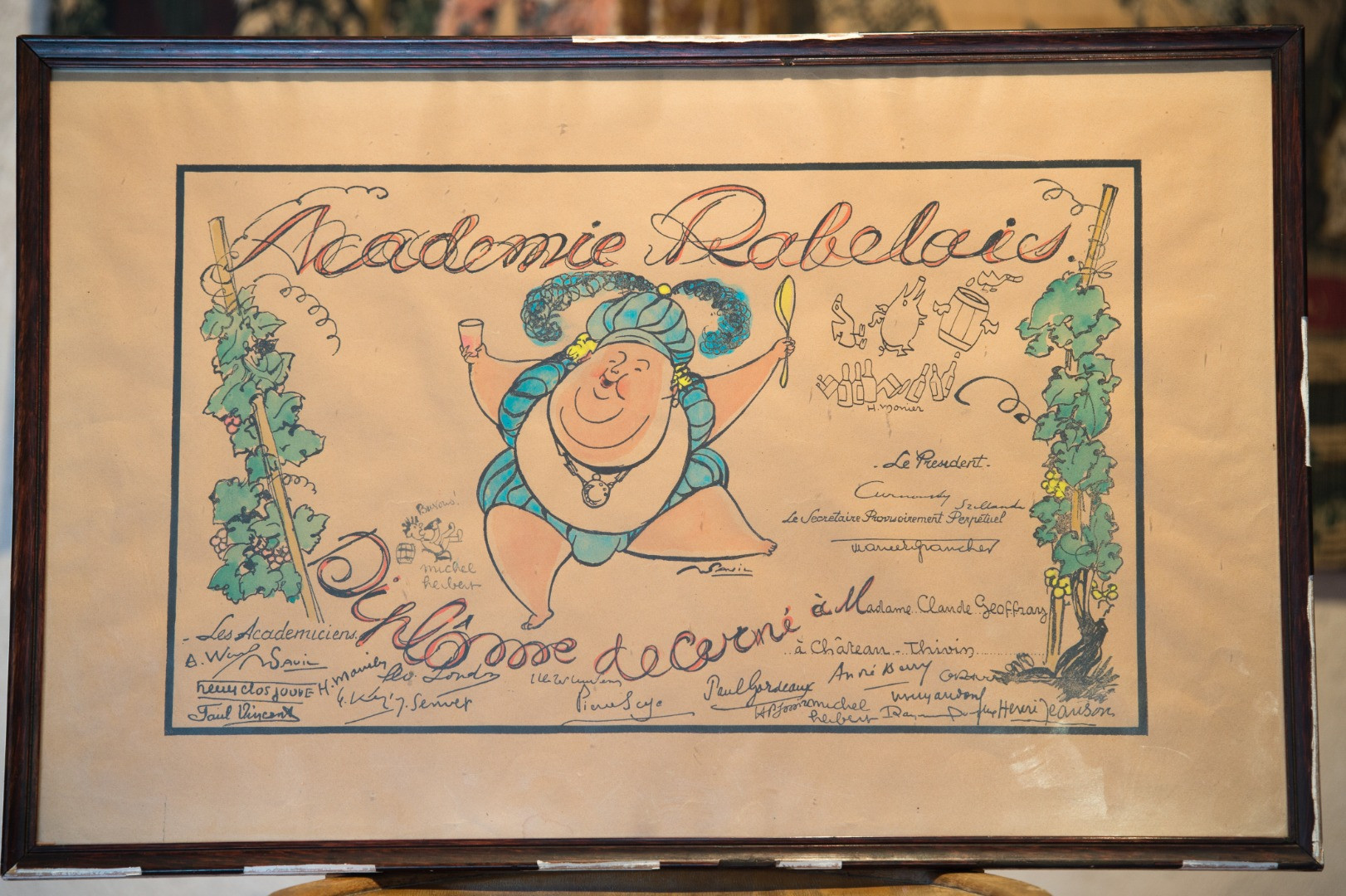
Académie Rabelais
En 1948 des journalistes et des gastronomes prestigieux tels que Curnonsky, Clos-Jouve, Henri Monnier du Canard Enchaîné et bien d’autres fondent dans la salle des vendanges du château, l’Académie Rabelais, qui officie toujours.
Durant l’occupation allemande, un certain nombre d’écrivains et de journalistes, entre autres ceux du Figaro, s’étaient repliés à Lyon et se réunissaient régulierement en cachete pour organiser des dîners où la table et le vin évoqueraient le bon vieux temps d’avant-guerre. Après la guerre le groupe d'amis décide de crére une académie.
Il est dit dans le paragraphe “objet” des statuts de l’association :
“Encourager chez ses membres et leurs amis : la Joie de vivre, l’Optimisme, la Bonne Humeur, l’Indulgence, la Gaieté, le Culte de l’Amitié et du Souvenir, le respect des principes du Maître François Rabelais : le Rire, l’Ironie, la Farce, la Chanson Joyeuse, le Bien Penser, le Gai Savoir, le Bien Manger et le Bien Boire.”
www.academie-rabelais.fr -
1960
Claude Bernard
Since Claude and Yvonne Geoffray had no children, their nephew Claude Bernard would become the ardent defender of all these actions and one of the figures who would leave his mark on the Beaujolais wine-growing region.
-
1975
Claude Vincent & Evelyne
Then it was the turn of Claude Vincent, Claude and Yvonne’s great-nephew, to take up the reins of the estate, with his wife Evelyne Martin, daughter of wine-growers from Saint Lager, who brought a number of vineyards from her family estate “Le Manoir du Pavé”.
Claude Vincent started work at his aunt’s estate in 1975. When he started, he would build the new multi-level vat room; and not without consequences, as the old vat room collapsed during the works and was rebuilt exactly the same. Fortunately the full tuns withstood the shock. But the 1976 grape harvest was laid down in casks in a vat room with no roof... -
1977
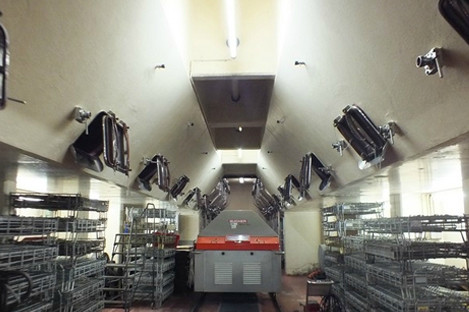
Modernization of the vat room
A daring, innovative creation dreamt up by Claude Vincent and Evelyne to make best use of the slope of the hillside in order to work by gravity.
-
2004
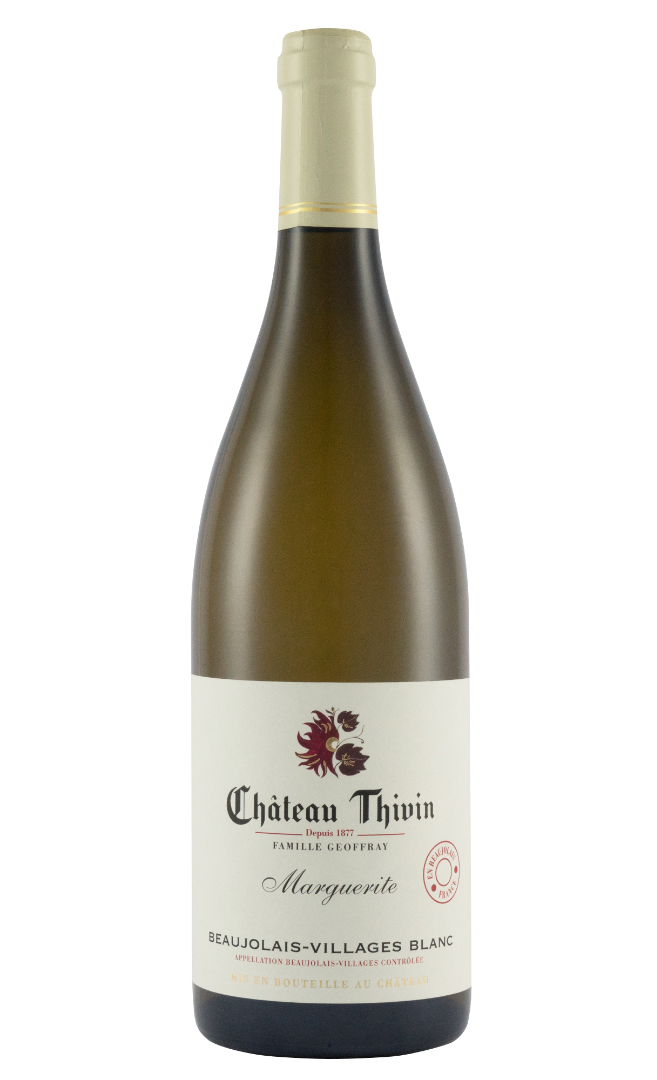
First harvest of Chardonnay
The “Marguerite” wine is born. Marguerite, in homage to Marguerite Geoffray, wife of Zaccharie Geoffray, the first generation of the Geoffray family at Château Thivin.
-
2007
Claude Edouard & Sonja
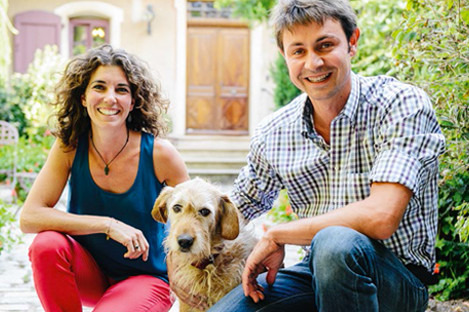
Claude Vincent and Evelyne’s son Claude-Edouard joined the estate in 2007 with his wife Sonja Baumann, a wine-grower from Valais whom he’d met while studying at the Changins College in Switzerland.
-
2008
Extension to the storage cellar
-
2009
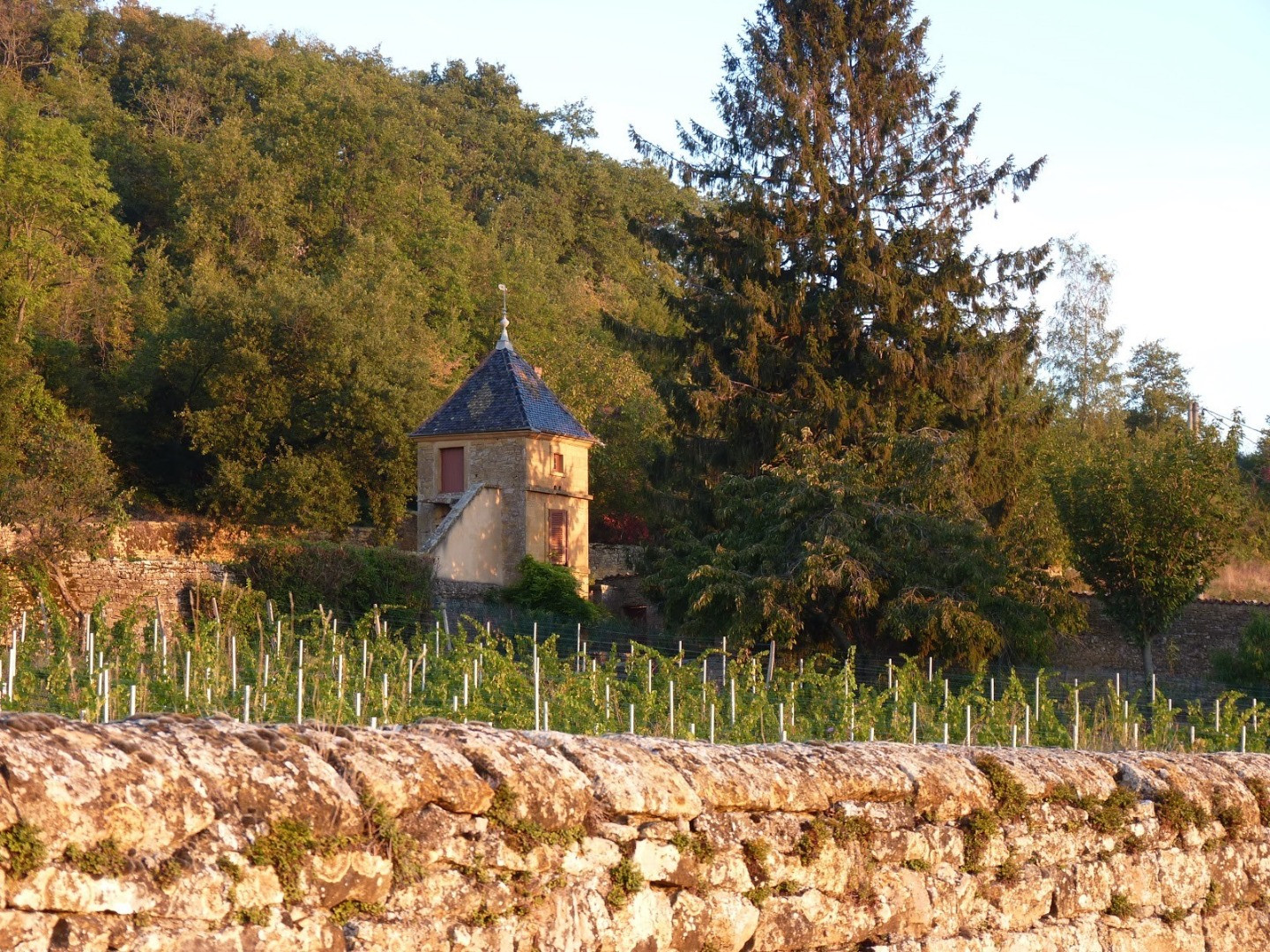
The Clos de Rochebonne (Theizé) planted with Chardonnay
The Clos de Rochebonne in the village of Theizé in the Pierres Dorées region is a real walled vineyard of 1.25 ha on a fine clay/limestone terroir.
-
2014
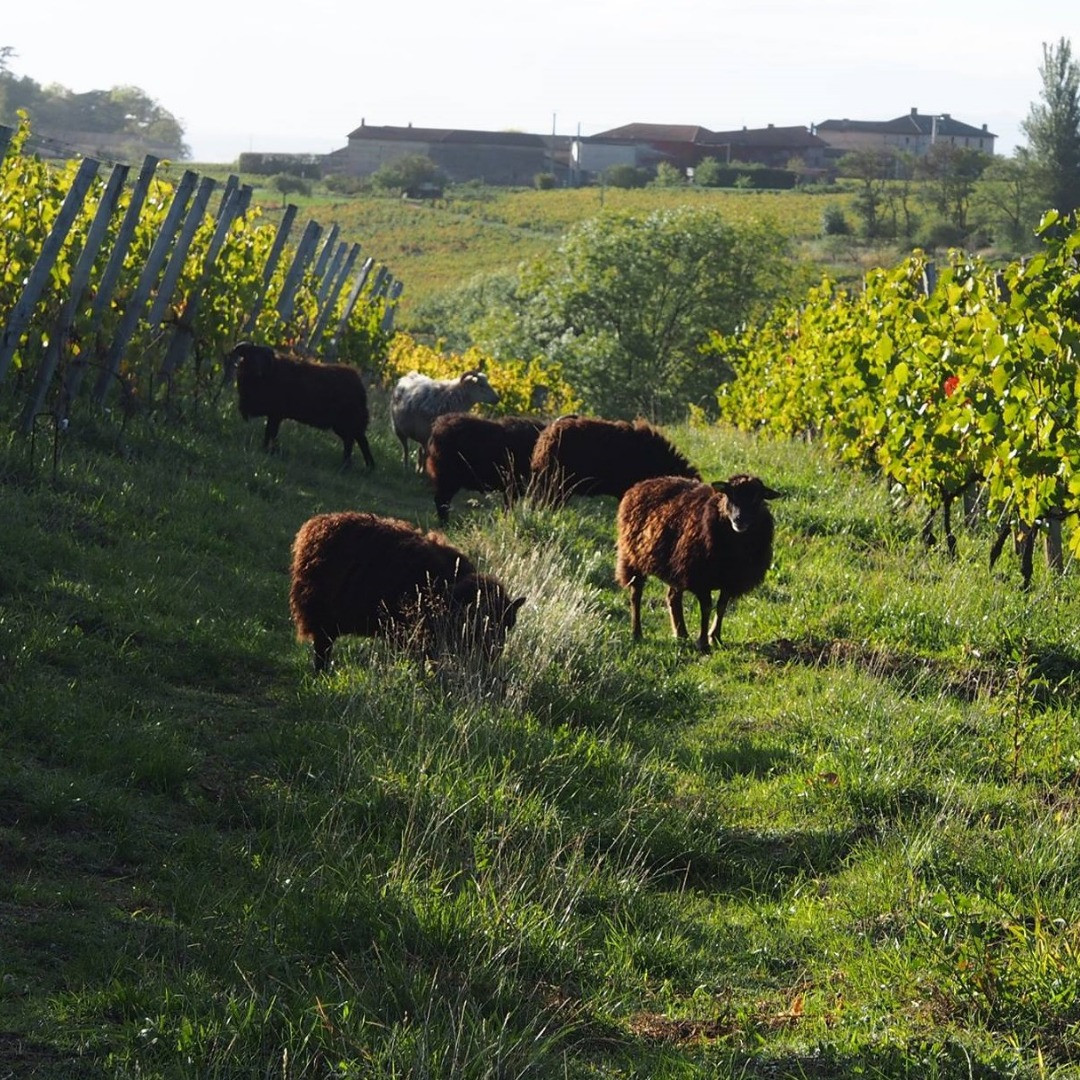
The sheep arrive on the estate
Sonja introduced a small heard of dwarf sheep in the Château’s historic walled vineyard. These little sheep of the Ushant breed graze in among the vines after the grape harvest until the buds burst, helping to maintain the green cover between the rows of vines. During the growing period, the sheep are moved to the tree-lined meadow alongside the plot.
-
2017
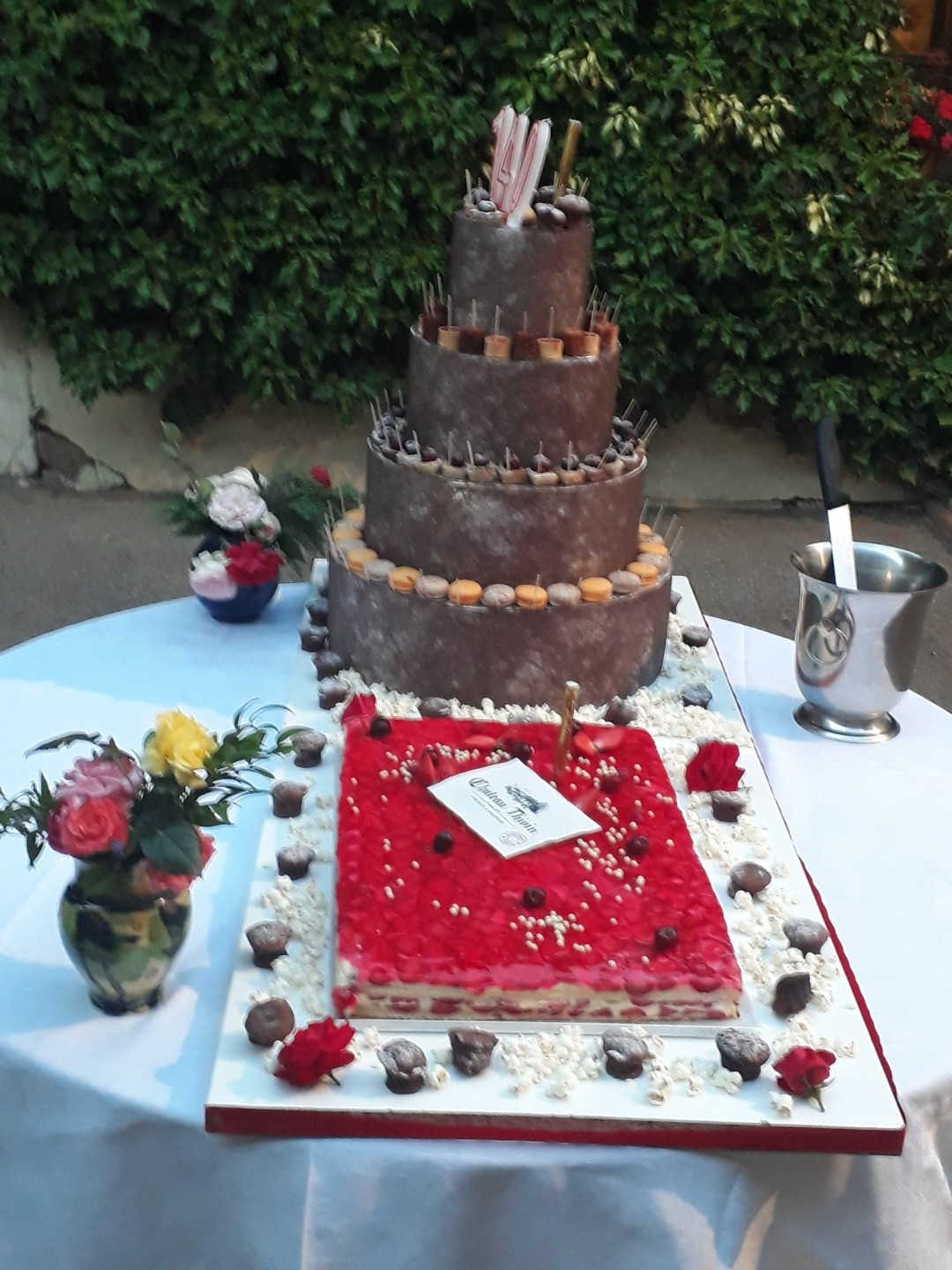
Château Thivin’s 140 vintages
The 2017 vintage represents the 140th vintage vinified by the Geoffray family at Château Thivin!
-
2026
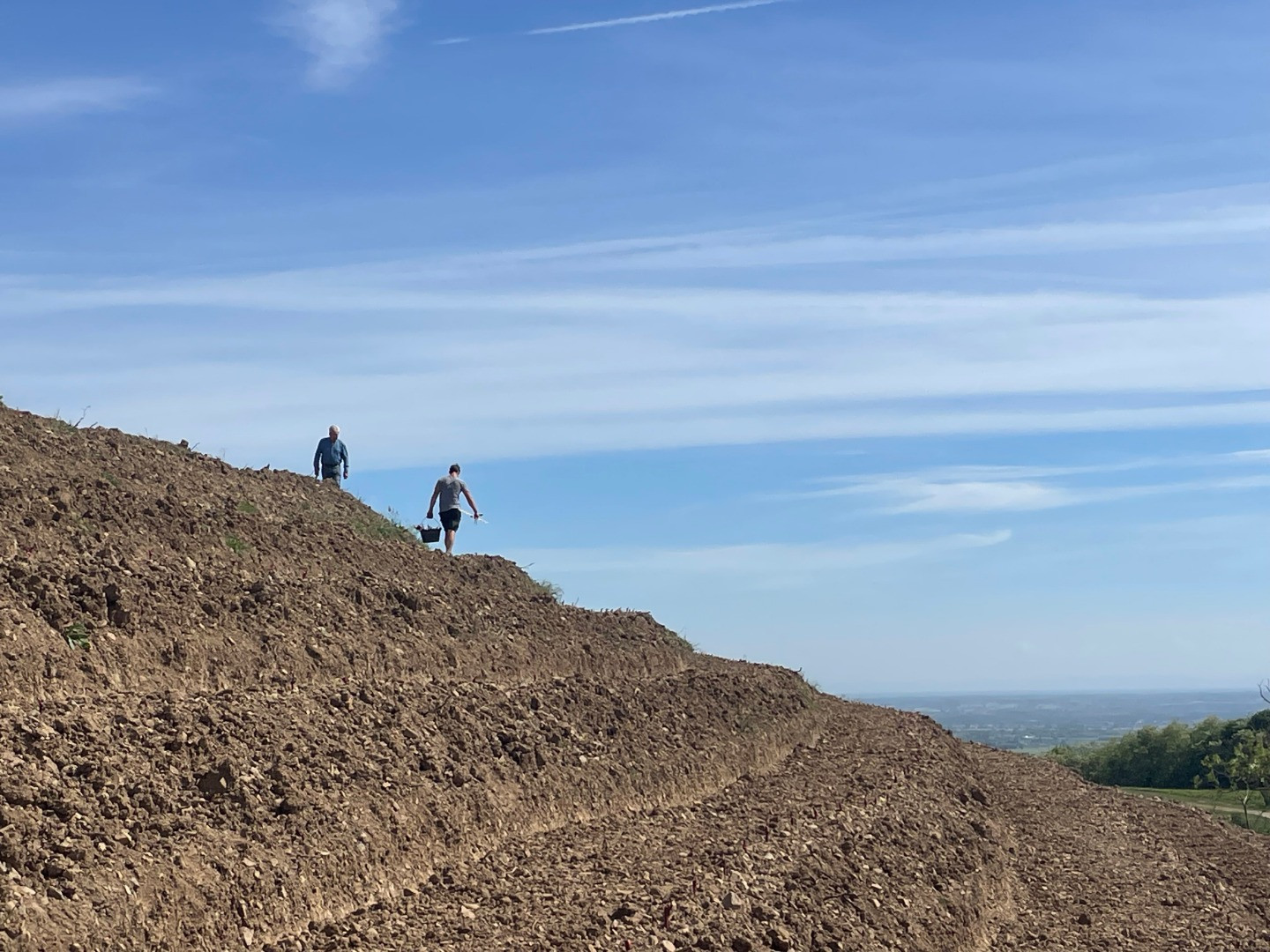
La première plantation de vignes en terrasses en Côte de Brouilly.
Un nouveau chapitre commence sur le haut du Mont Brouilly, sur les plus fortes pentes de la Côte de Brouilly.
Trois générations sont réunies pour écrire ce nouveau chapitre: La première plantation de vignes en terrasses en Côte de Brouilly.
Après une longue periode de recherche et reflexion, les traveaux de terrassement ont enfin pu avoir lieu sur un sol réssuyé en ce fin de printemps.
Les terrasses sont crées par Claude Edouard et son minipelleteuse en 5 jours de travail.
Un travail de précision, de sculpture, pour façonner un paysage pensé pour durer.
Ici, chaque ligne suit les keylines, pour accompagner les flux naturels de l’eau et révéler tout le potentiel du terroir.
Le vignoble de demain, plusieurs raisons nous ont poussées vers ce profil de plantation
— meilleure gestion de l’eau grâce aux terrasses (keyline design)
— moins d’énergie pour l’entretien des vignes
— une lutte efficace contre l’érosion
— Créer un vignoble résilient, en travaillant avec la topographie plutôt que contre elle.
La platation se fait le 2 mai 2026